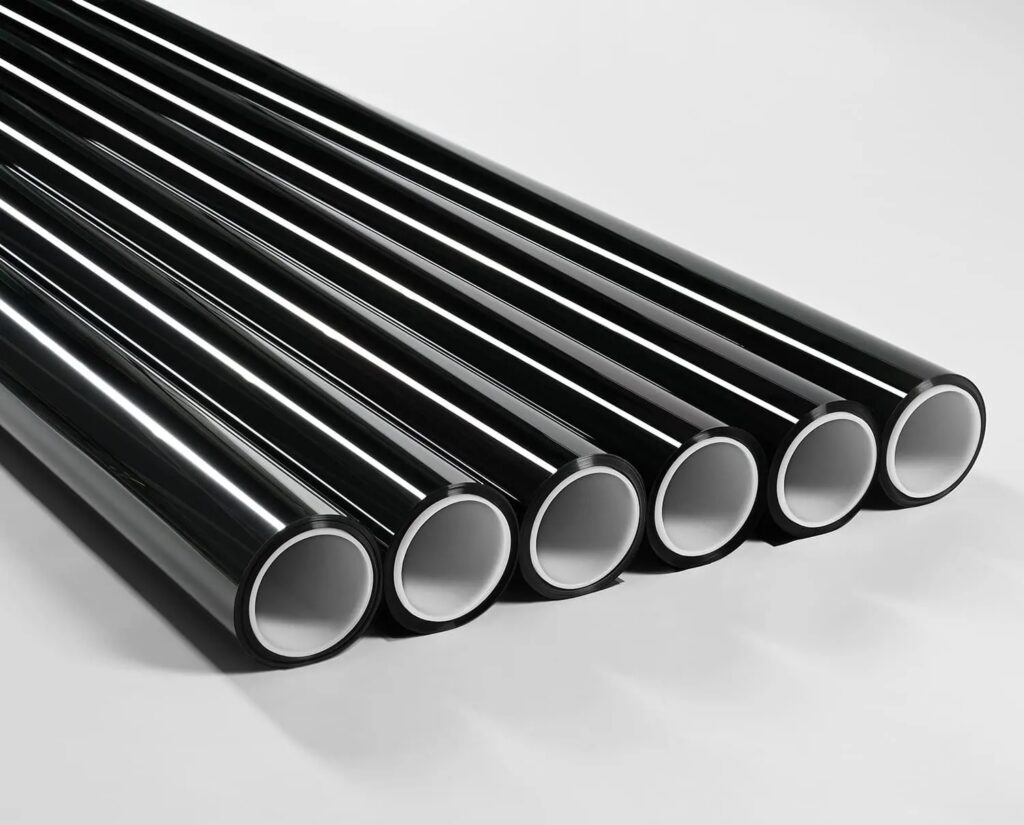
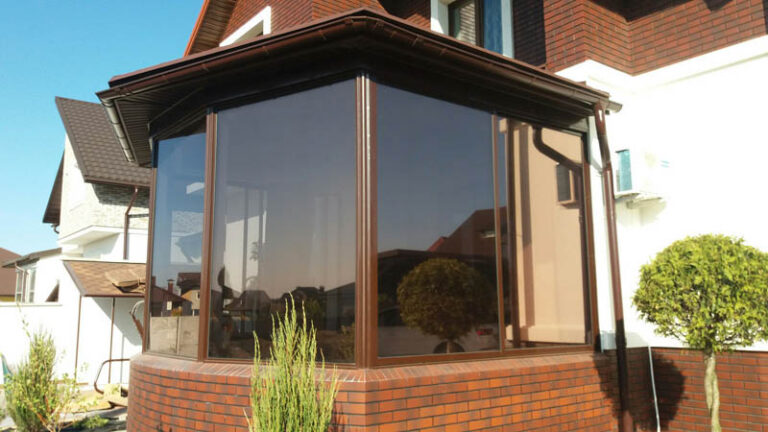
When the real sweltering heat of summer sets in, air conditioning seems like the only salvation. But there is a downside to this salvation: sky-high electricity bills, the constant hum of the fan, and the risk of catching a cold from the icy blast of air.
Let’s be honest: a sun protection film is no substitute for an air conditioner; it doesn’t have a compressor or refrigerant. But it can make your air conditioning system work far more efficiently, so you don’t end up paying more for your electricity. Let’s take a look at how this combination works in practice.
Why is the air conditioner working itself to death on its own?
Imagine you’ve switched on the air conditioning but left the oven door open. That’s roughly what happens on a sunny day. Unprotected windows let in vast amounts of thermal energy (infrared radiation). The sun’s rays heat up the floor, walls and furniture, turning them into giant radiators.
The air conditioner has to contend not just with warm air, but with a constant, powerful influx of heat from outside. To maintain a comfortable 22°C, it has to run at full power without interruption.
How window film helps your air conditioner: three key benefits
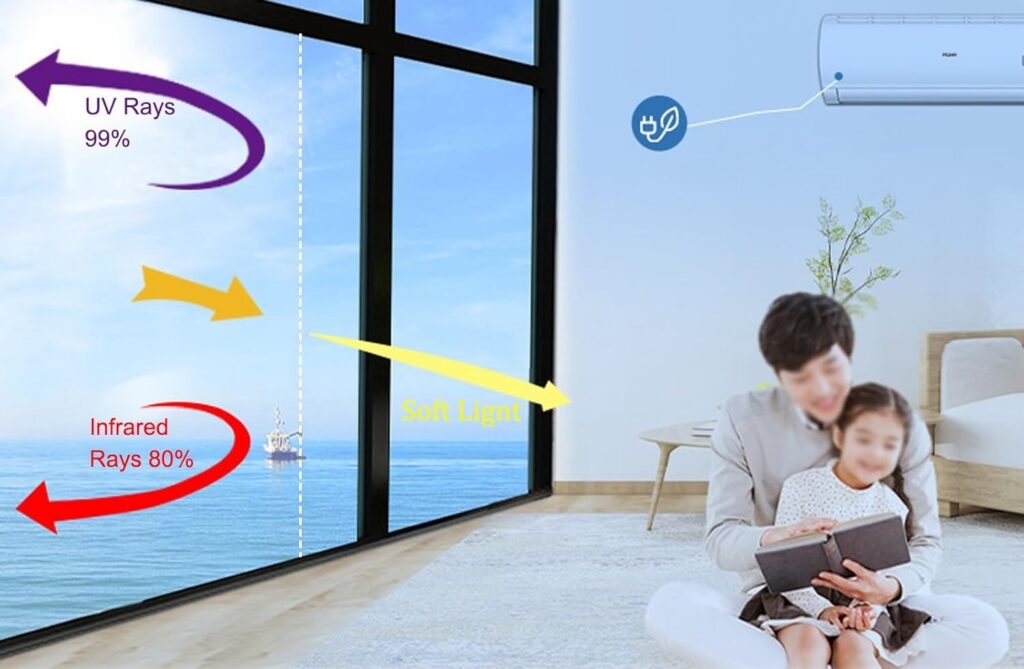
High-quality window film acts as a thermal barrier, which radically changes the operating conditions for your air-conditioning system:
- Reduced peak load (blocking up to 80% of heat):
The film reflects infrared rays while they are still on the glass. The heat simply does not enter the room, so the floor and furniture do not heat up. The air conditioner simply has to maintain a cool temperature, rather than battling against a scorching interior. - Real electricity savings:
As the heat influx decreases, the inverter air conditioner quickly reduces its speed and switches to energy-saving mode. In the long term, this allows you to reduce air-conditioning costs and recoup the initial investment, whilst the unit itself wears out much more slowly. - Comfort without the ‘draught’ effect:
To cool a room heated by the sun, an air conditioner has to blow out freezing air. This is why people often catch colds at home. When window film is fitted, the air conditioner only needs to run at minimum speed — the room feels fresh, but without any dangerous draughts.
What should you do if there isn’t an air conditioner at all?
In some houses or rented flats, it is technically impossible or too expensive to install an outdoor unit for an air-conditioning system. In such cases, a sunshade is the best passive solution. It will lower the room temperature by a noticeable 4–7 degrees. That is the difference between „unbearable stuffiness“ and „a normal, comfortable room temperature“.
FAQ: Answers to frequently asked questions about saving money
-
Which film works best in combination with air conditioning?
Exterior (outdoor) mirrored or sputtered films are ideal for minimising heat gain. We explained in detail why it is important to choose external installation for modern double-glazed units in our article “Internal or external film: how to properly protect modern windows and avoid thermal shock”
-
Will installing the film be worth the cost?
Yes. If you calculate the difference in the air conditioner’s electricity consumption „before“ and „after“ the windows have been fitted with film, the cost of the film is fully offset by the kilowatt-hours saved over a couple of busy summer seasons in Estonia.
-
Will the house be cold in winter because of the plastic sheeting?
No, quite the opposite! In winter, the sun is low in the sky in our part of the world and doesn’t provide much warmth; most of the heat comes from the radiators. The film traps the heat inside (especially if it’s a selective coating) and prevents it from escaping through the windows into the street.
Conclusion: we are staying one step ahead
Trying to cool a room with unsealed windows using an air conditioner is like trying to pour water through a sieve. It makes more sense, and is more cost-effective, to block the inflow of heat from outside first, and only then create a comfortable indoor climate.
At aknakile24, we can help you find a sun protection solution that will reduce the strain on your appliances, protect your interior and bring a real summer breeze into your home.